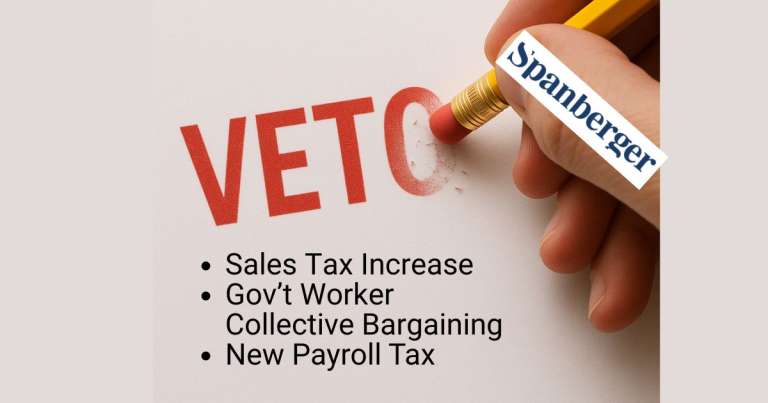
5/14/2026 — Virginia Senate Majority Leader Scott Surovell, the sponsor of a sweeping public-sector collective bargaining bill (Senate Bill 378), said Governor Spanberger told him Wednesday that she planned to veto the legislation. If she does, she will be making the right decision for Virginia taxpayers, local governments, students, public employees and for her status as the leader of her party here in the Commonwealth.
According to her amendment justification, Governor Spanberger supports collective bargaining generally, but not the way this bill would implement it. That distinction matters!
The original bill was not a modest reform. It would repeal Virginia’s existing limits on public-sector collective bargaining, create a new Public Employee Relations Board, require public employers to negotiate over wages, hours, and other terms of employment, and establish collective bargaining for individual home care providers through a new state structure. It also would repeal Virginia’s statutory protection declaring secret-ballot votes in union representation proceedings a fundamental right.
The Jefferson Forum warned repeatedly that this legislation would move Virginia in the wrong direction. It would weaken local control, increase costs, empower union bosses, inject more politics into public institutions, and impose rigid labor rules at the very moment Virginia needs flexibility and affordability.
Governor Spanberger’s proposed amendments recognized many of our concerns. She sought to delay implementation for local governments until 2030, alter the new labor board structure, and preserve more authority for public employers. The General Assembly rejected those changes and sent the bill back to her in its original form. A clear disregard for the Governor’s concerns and authority.
That left her with what the Jefferson Forum called the only responsible option: veto.
This veto also serves as a reminder to the General Assembly that making law is a two-way street and that a Governor’s responsibility to Virginians means more than just paying attention to certain folks in Portsmouth and Fairfax County. The Governor’s amendments should not be ignored.
Virginia’s local governments have been sounding the alarm. The Virginia Association of Counties said roughly 70 percent of counties had passed resolutions opposing the bills and urged a veto after the General Assembly rejected the Governor’s reasonable amendments.
Their concern is simple: collective bargaining mandates are not free. They require lawyers, consultants, negotiators, new administrative systems, new state bureaucracy, and eventually higher compensation costs. Those costs do not come from union headquarters. They come from taxpayers.
The experience in places like Fairfax County should be a warning, not a model. Once collective bargaining becomes embedded in local government, personnel costs rise, flexibility falls, and elected officials lose control over major budget decisions. The result is pressure for higher taxes, especially property taxes.
This is why the Jefferson Forum has long argued that public-sector collective bargaining is fundamentally different from private-sector bargaining. In the private economy, unions negotiate over business profits. In government, there are no profits. There are only taxpayers, students, homeowners, patients, and public services competing for limited dollars.
The bill also raises serious worker-freedom concerns. The Only taxpayers, students, homeowners, patients, and public services compete Jefferson Forum warned that the proposal could force public employees into bargaining units represented by unions they may not support. In a right-to-work state, workers should not be compelled to accept union representation or see workplace rules negotiated by organizations they did not choose.
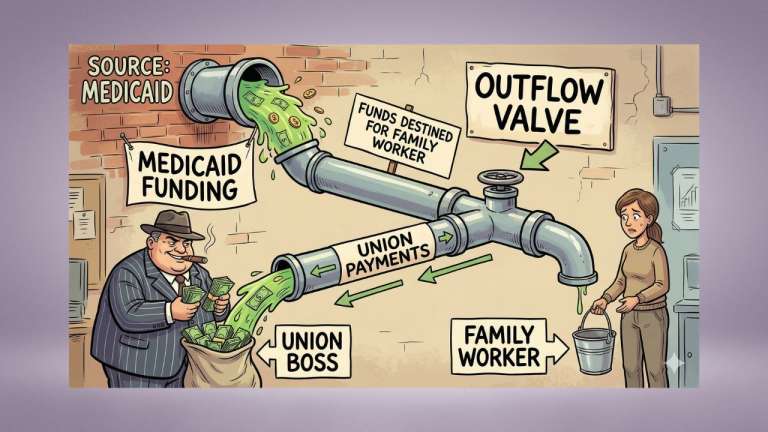
The “dues skim” problem is especially troubling for home care. Jefferson Forum has warned that organizing individual home care providers could divert public dollars intended to help vulnerable Virginians and their caregivers into union dues and political power.
Higher education is another danger zone. As I argued earlier this year in Cardinal News, Virginia’s colleges and universities already face an enrollment cliff, rising costs, tuition pressure, and deep political division. Collective bargaining would lock institutions into rigid labor agreements just when they need flexibility to adapt.
Virginia’s public universities should be focused on students, affordability, research, and workforce preparation — not becoming the next battlefield for organized labor politics.
Governor Spanberger deserves credit if she follows through with this veto. It will not be an easy decision politically. Public-sector unions made this bill a top priority. Progressive lawmakers will complain. Activists will claim the veto is anti-worker.
It is not.
A veto would be pro-taxpayer, pro-local government, pro-student, pro-affordability, and pro-worker freedom. It also shows the Governor is willing to stand by her amendments and not bow to political pressure. Governor Spanberger campaigned as a pragmatic leader. This veto would be a chance to prove it.
The General Assembly overreached. Local governments objected. The Governor tried to fix the bill. Legislators refused.
Now she should veto it and Virginia should thank her for doing so — the Jefferson Forum will lead the applause!