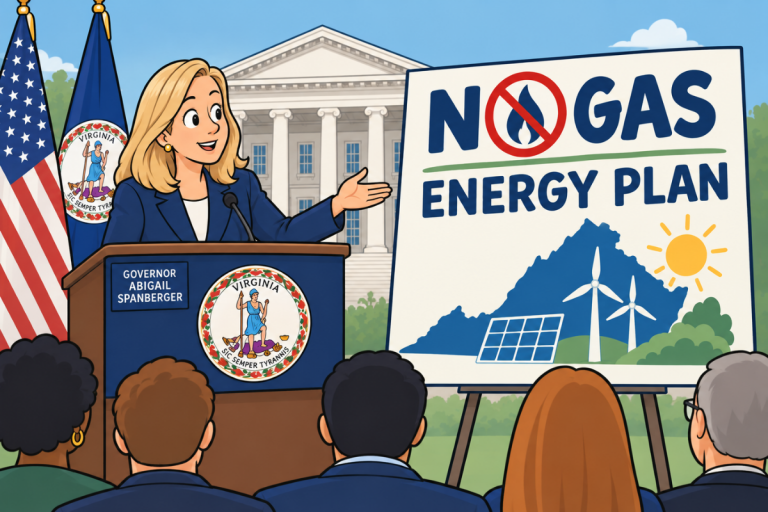
5/18/2026 — In advance of the 2025 election, the Jefferson Forum outlined in this June commentary the energy challenges facing Virginia. New Governor Abigail Spanberger (D) and the General Assembly have now concluded work on the 2026 energy legislation and Virginia has made zero progress – and may be losing ground.
Ignore the political posturing coming from Capitol Hill in Richmond. The reliability risk remains, and electricity costs are going to keep rising.
It would be nice to report that Jefferson Forum’s efforts, including more time at the Assembly this winter, made a difference. But being closer to the process this year only underlined that the elected officials are working without much understanding of the issues, that most bills are not accompanied by financial analysis or ratepayer impact information, and the various donor groups, such the utilities and those seeking to dictate utility policy, are heard more often than average consumers.
The key issue a year ago was the growing disconnection between Virginia’s electricity demand and its internal supply. Projected demand from the exploding data center industry even calls into question whether the multistate PJM Interconnection Virginia belongs to will have enough supply for Virginia in coming years, and it certainly won’t without controversial new transmission lines.
The General Assembly session passed nothing that will close the looming supply shortage. Another bitter winter blast like the one early this year, or a summer heat spell requiring an equal energy surge, could bring the dreaded involuntary demands to reduce or cut off the power.
Yes, several bills passed to encourage private investment in home or small business solar installations, but their usefulness in a major energy crunch – especially a winter storm – is limited. Yes, both major electric utilities are going to start adding major battery capacity, especially Dominion Energy Virginia, but batteries generate nothing and have limited duration. They do not add energy overall and instead lose energy every time they cycle.
Rather than encouraging added generation, the Governor and General Assembly were focused on electricity costs, both the issue of cost overall and the perception that costs are so high because data centers are getting favored treatment. Again, even if you accept our leaders were seriously concerned, here at the end it is clear they did nothing on either front.
On the contrary, several pieces of legislation soon to take effect will increase residential bills substantially over time. Leading the charge will be the carbon tax behind the Regional Greenhouse Gas Initiative (RGGI), with futures prices for carbon allowances suddenly spiking to records, a warning about what will soon be showing up on customer bills.
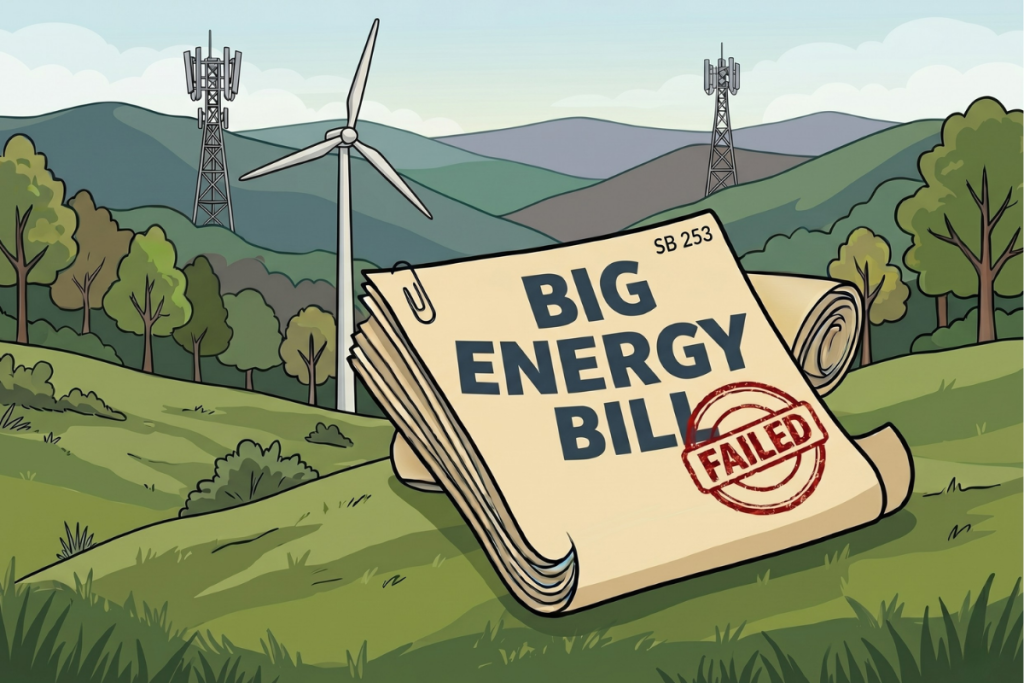
Governor Spanberger this past week signed the final big energy bill that was still pending, which had several provisions that she had sought to amend. With many of her amendments rejected, she had the option to veto the bill, and that would have been a good outcome for consumers. She instead chose to sign it as the Assembly sent it to her.
There was one slight bit of good news in her announcement about the action, an agreement she extracted from Dominion Energy Virginia in a side deal. The bill as signed allows Dominion five more years to run its expensive and questionable program to bury existing residential tap lines, but Dominion has agreed (she says) to stop once it reaches the goal it initially set a decade ago.
That will be less capital than Dominion initially intended to pour into its rate base, and less profit than it expected to reap. It is still the case that the extra charge to all consumers for the program will continue for years after it otherwise would have stopped, costing them all more money.
But her announcement also included a statement of nonsense; a claim that another provision she approved would force more costs onto the data centers and remove those costs from residential consumers. That portion of the bill as signed does nothing new. It simply orders the State Corporation Commission (SCC) to do the job it already does, deciding how to fairly allocate costs and prevent one customer class from subsidizing another.
The Governor and the Democrats in the legislature are still wrestling over a stalled budget, with the tax treatment of the data center industry as a major point of disagreement. So far the point of those taxes is to shore up state or local spending outside the energy realm, not to lower anybody else’s electric bill or solve the demand problem.
Every year it is becoming clearer that one major reason for electricity price increases is the mandate in the Virginia Clean Economy Act that Dominion and Appalachian Power Company must buy renewable energy certificates, or RECs. The SCC continues to warn that the cost of those is only going to grow over time. Failing to buy enough RECs triggers a financial fine, and either way they pay, ratepayers are getting zero energy for their dollars.
But the Democrats in control of the General Assembly rejected every bill to either eliminate or dilute that part of the Virginia Clean Economy Act, to stop the massive spending on RECs. Spanberger continues to pledge her allegiance to the VCEA.
By the end of Spanberger’s term, the return of RGGI, the early stages of the mandated wave of battery installations and a host of new energy subsidy programs aimed at lower costs for favored customers (financed by the rest of us) will be taking their toll. In fairness, fuel costs are also rising with federal decisions playing more of a role.
That monthly 1,000 kilowatt hour bill that Dominion uses as a cost illustration, now running above $170, will quickly be approaching or exceeding $200. Customers of the other power suppliers, including the regional rural cooperatives, will also see rising bills through this governor’s term.
Seeing what is coming, and understanding why it will happen, doesn’t make it any easier to contemplate. Voters who share that understanding need to keep sharing the message that what Virginia really needs is more generation, steady generation from truly reliable sources, and an end to the various government schemes to spend ratepayer’s dollars on something other than electricity.
Steve Haner is the Senior Fellow for Energy and the Environment at the Jefferson Forum and may be reached at Steve@thomasjeffersoninst.org