Key Takeaways:
- SCOTUS’s Callais decision strengthens political accountability by making it harder to rely on race-based majority-minority districts as guaranteed partisan strongholds.
- Descriptive representation does not always produce substantive representation, especially when minority voters support policies—like school choice—that their elected officials often oppose.
- By forcing both parties to compete more seriously for Black voters, Callais could give Black parents more leverage to demand the education options they already overwhelmingly support.
7/9/2026 — The 2025-26 Supreme Court term is now over, which means we are now witnessing the usual handwringing that passes for analysis of the decisions the Court handed down. The Court is woke. The Court is fascist. The Court is politicized. The Court is decadent and corrupt. Yawn.
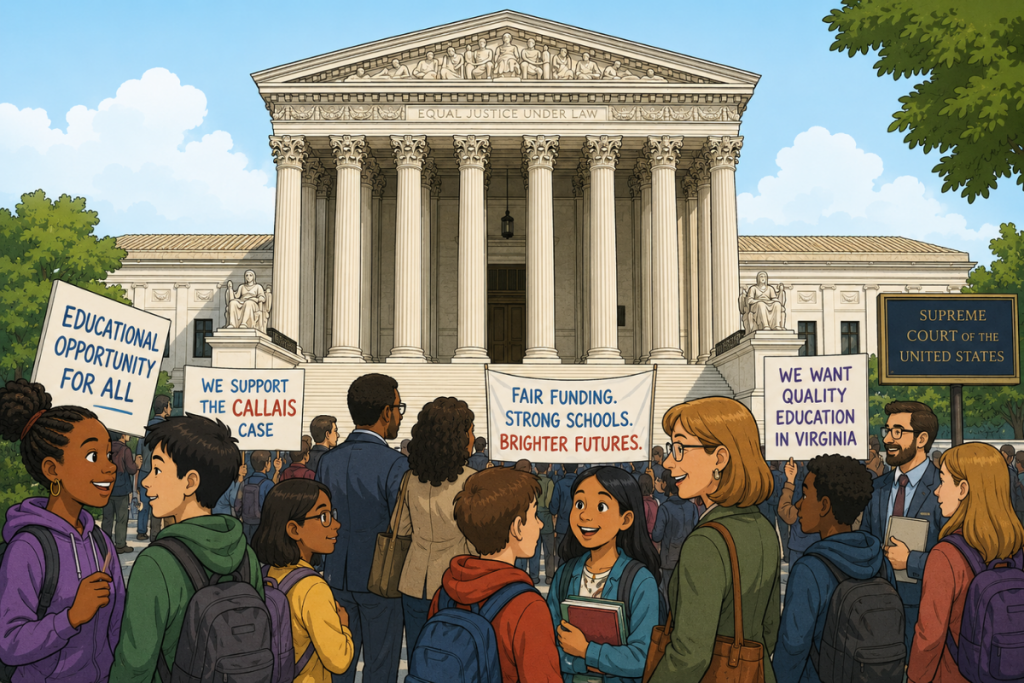
One of those decisions is Louisiana v. Callais, which deals with majority-minority congressional districts. In short, the case revolved around the State of Louisiana adding another majority-Black district to its congressional map; relying on Section 2 of the Voting Rights Act, Louisiana followed what has become a long-standing practice: using vote-dilution concerns to justify drawing a district in which a racial minority statewide becomes a majority within a particular district.
The argument is that if there is a geographically cohesive bloc of minority voters that could vote as a bloc but is divided into separate congressional districts where its political influence is diluted by a larger bloc, then those votes count for less in any practical sense. In practice, however, this approach has often produced wildly drawn districts that are far from geographically cohesive.
Callais addresses that issue. The decision means that districts can be drawn without treating minority voting blocs as the overriding consideration — and that challenges to new maps will have a much steeper hill to climb on vote dilution grounds. Vote denial prohibitions — simply refusing someone the franchise due to inherent characteristics such as race, sex, religion, and other similar traits — remain fully in force, but the prior practice of using vote dilution claims to require race-conscious districting has been changed dramatically.
The response to Callais has been as apocalyptic, as it has been predictable: Black voters will lose representation. Civil rights protections have been gutted. We are returning to Jim Crow. None of these assertions are accurate. Indeed, specifically as it relates to African American voters, this decision may help return wider electoral influence to that constituency.
Broadly speaking, the Black vote was far more politically competitive before the Johnson administration. Eisenhower won nearly forty percent of the Black vote in 1956. Nixon won nearly a third of the Black vote in 1960. It was not until 1964, when the voting-rights regime at issue in Callais was enacted, that African Americans consolidated so overwhelmingly within the Democratic Party — a coalescence later reinforced by the very majority-minority districts this decision affects.
The development of increased electoral influence through racially drawn districts is not always beneficial to the minorities doing the voting. In a 1996 paper Columbia University researchers Sharyn O’Halloran, David Epstein, and Charles Cameron demonstrated that majority-minority districts can diminish minority influence by creating supermajority districts that produce descriptive representation while preventing the same voters from influencing adjacent districts.
O’Halloran was joined by fellow Columbia University researcher Thomas Groll earlier this year in a follow up project that further shows descriptive representation does not guarantee substantive representation. In other words, simply electing a minority candidate to represent a majority-minority district can give that district a representative elected official without delivering any substantive benefit to the electorate.
And we see this trend nowhere more clearly than on the issue of school choice.
School choice is one of the most visible examples of minority officeholders voting in divergence from the electorate they represent. While the Democratic Party has been steadfastly against school choice measures as a rule, the African American community overwhelmingly supports a wide spectrum of choice measures, including charter schools, refundable tax credits, Education Savings Accounts, homeschooling protections, and more.
The American Federation for Children regularly conducts polls — most notably in 2021, 2023, and 2024 — showing strong and consistent Black support for school choice. A 2023 poll from the education reform nonprofit EdChoice showed that Black respondents overwhelmingly support vouchers (79%), Education Savings Accounts (78%), open enrollment (78%), and charter schools (74%). A recent poll from one of our predecessor organizations, the Yorktown Foundation for Public Policy, resulted in similar findings: Black respondents strongly supported school choice in general (77%), and Education Savings Accounts in particular (63%). In the Yorktown poll, 46% of Black respondents also stated that Virginia does not have enough school choice options, with another 30% unsure.
Over time, and even when asked about the details of specific policies, the African American community has supported school choice by wide margins. Yet, the Democratic Party for which African Americans overwhelmingly vote, denies that community those options. One cannot help but wonder if we are seeing O’Halloran and her coauthor’s work borne out in real time: Black voters are getting descriptive representation, but not substantive representation.
Callais changes that trajectory. Now that states will have a harder time drawing majority-minority districts for racial purposes, Democrats will no longer be able to count on supermajority districts as secure political fortresses. As Republicans, traditionally the party more supportive of school choice, begin more aggressively making that case to Black voters, Democrats will have to do the same — or lose a longstanding electoral advantage. Indeed, an organization called Democrats For Education Reform is sounding that very alarm.
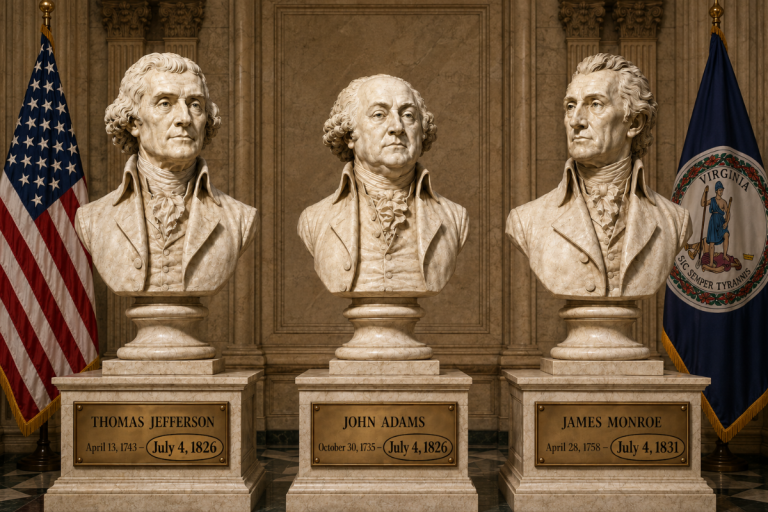
We have just completed the celebration of America’s 250th birthday. Our country was founded on the demand that our political system exists only with the consent of the governed. Those who want to govern, in other words, should have to work hard to earn the consent of the citizenry they want to represent. Our country was also founded on self-determination: the self-determination of our nation and the self-determination of her citizens.
The Callais decision gets us closer to both ideals. If both parties must compete more seriously for Black voters, Black parents may gain more leverage to demand the educational options they already support. That is not a retreat from civil rights. It is a restoration of political accountability. And it is exactly the kind of outcome the Founders would have applauded.
C. Todd Hester is Vice President of Strategic Initiatives at the Jefferson Forum and may be reached at Todd@JeffersonForum.org